AI Transformation Is a Myth: Companies Don't Change Their Technology, They Change Their People (or Get Rid of Them
A few months ago, the CEO of a mid-sized company stood in front of his staff and announced a "major AI transformation." The company bought licenses for a few popular tools, ran a one-day training session, and gave the internal newsletter a new section called "AI Innovations." Six months later, the company laid off a fifth of its administrative staff. The official reason: "process optimization through artificial intelligence."
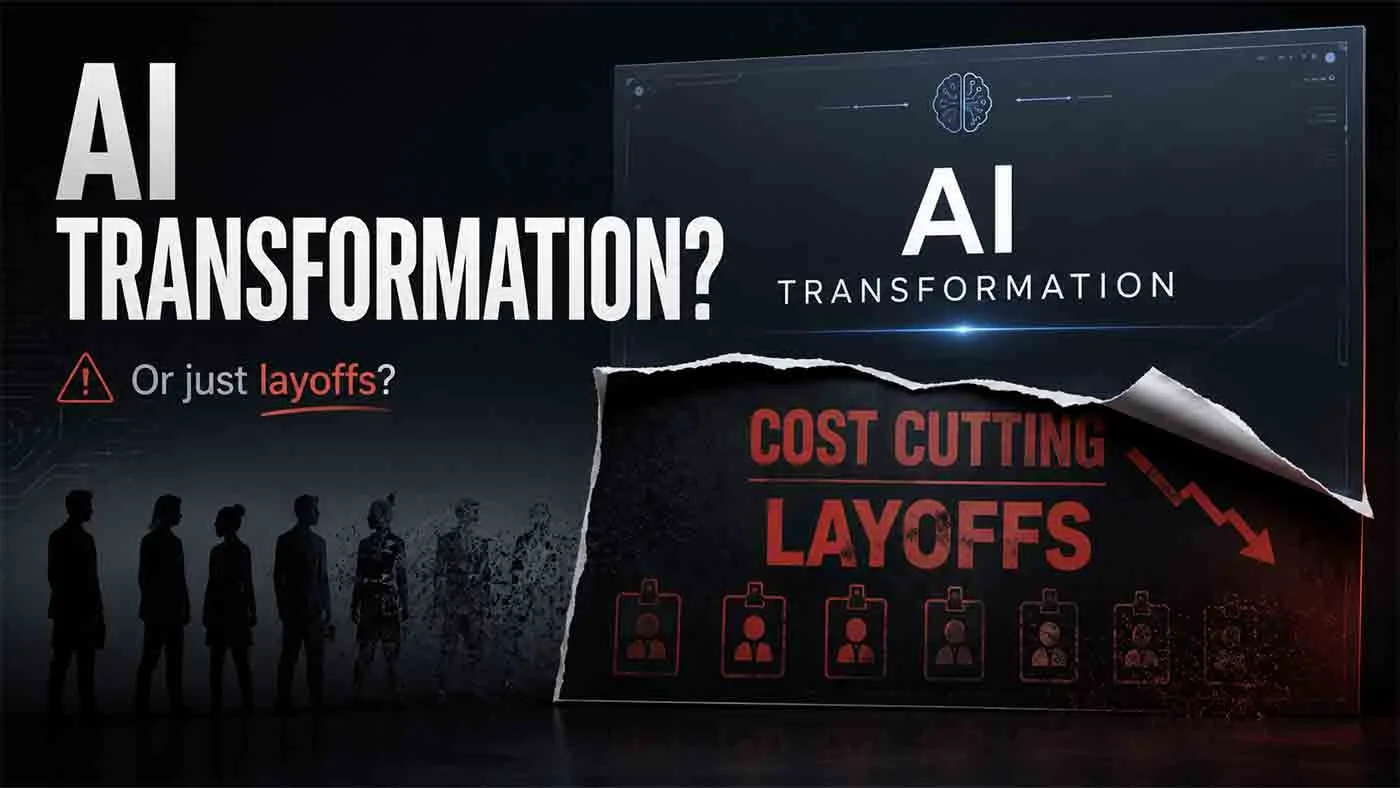
This isn't an outlier. It's the pattern. Companies everywhere are announcing that they're going through an "AI transformation," and what's actually happening rarely resembles transformation in any meaningful sense. Most of the time it's a rebrand: the same cost-cutting, the same restructuring, the same layoffs, wrapped in a newer, more marketable name.
Here's the claim this piece is going to make, and it's not a comfortable one. The AI transformation that gets sold to the public is a myth. Technology is almost never the hard part. The hard part, the one companies avoid because it's expensive, slow, and uncertain, is changing people: their skills, their roles, how they think about their work, and, when nothing else works, whether they still have a job.
What follows is an attempt to explain why this myth took hold, what's actually happening behind the doors of companies that claim to be transforming, and what real AI transformation would demand from an organization that actually wanted to pull it off.
The Myth of Technological Transformation
When executives talk about "AI transformation," they almost always mean buying software. License a chatbot, an automation tool, a data platform. Run a presentation for staff. Consider the story told. This rests on a bad assumption: that AI transformation is, at its core, a technical project, something IT rolls out and everyone else uses.
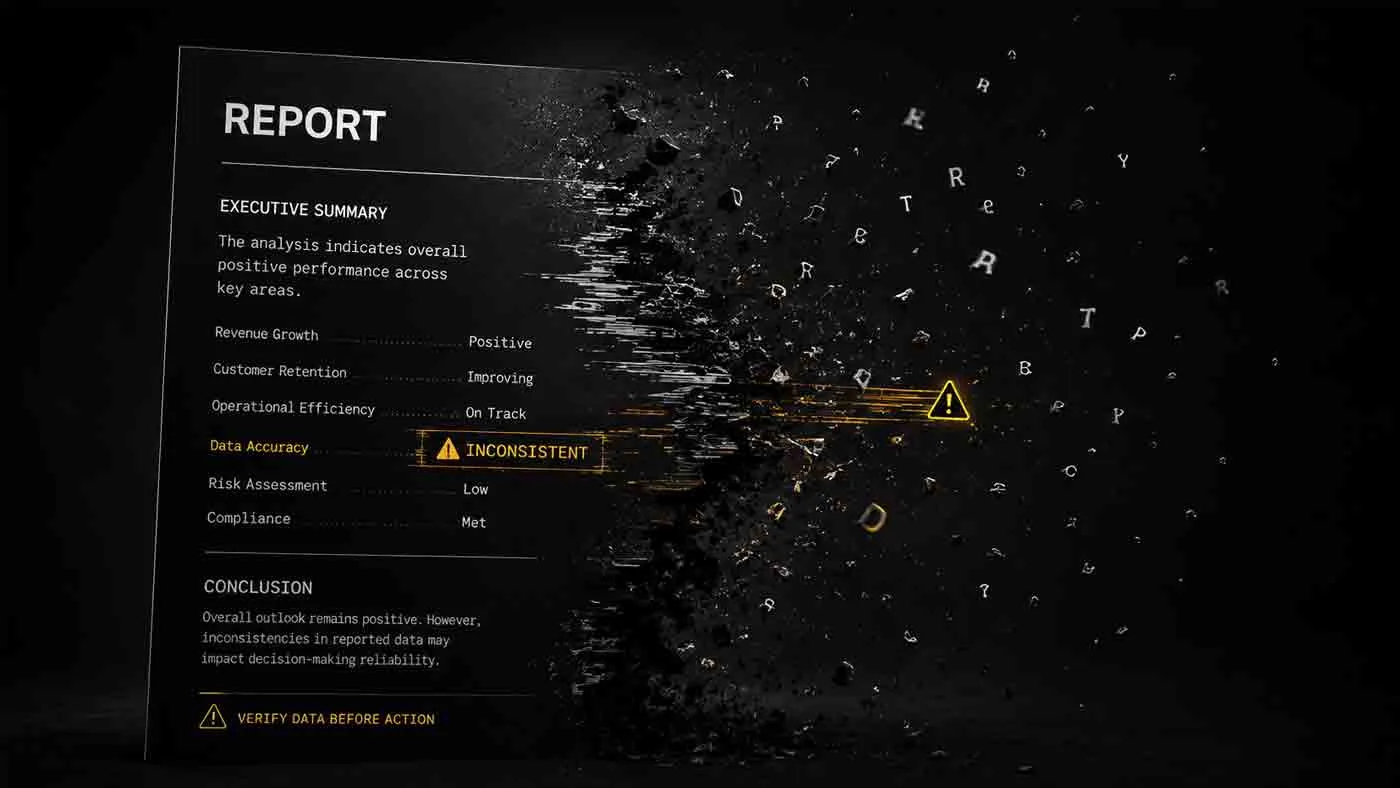
The reality is messier. A tool by itself changes nothing. What changes are processes, responsibilities, how decisions get made, and, above all, the people carrying all of that out. Skip that part and you get what analysts have started calling "AI theater": visible, well-documented activity that creates the appearance of progress without any real change in how the company actually functions.
The numbers back this up. Consulting research has shown for years that most digital transformation initiatives, and AI transformation is just the latest version of that story, fail to deliver on what was promised. The reason is almost never technical. The tool does what it was built to do. The problem shows up when the organization around it doesn't adapt, when staff don't understand why they're using it, or when management expects that buying a license will produce transformation on its own, with no further investment in the people who have to use it.
That's the first, and maybe most important, truth about AI transformation: the technology is the easy part. It gets purchased, it gets installed, and in most cases it works exactly as advertised. What's hard, and what gets skipped almost every time, is everything that has to happen after the purchase.
What's Actually Happening Behind the Scenes
The public story is about innovation and modernization. Inside a lot of these companies, something else is going on. Rolling out an AI tool has become the perfect cover for restructuring that would have been harder to justify on its own.
Layoffs that used to get called "cost reduction" or "reorganization" are now packaged as a natural consequence of AI transformation. The logic sounds clean and hard to argue with: if a tool can do part of what a person used to do, you need fewer people. That framing does a lot of work for management. It sounds like progress, not like cutting costs. The people losing their jobs aren't victims of a business decision. Officially, they're casualties of unstoppable technological progress, and nobody can be blamed for that.
The trouble is that reality rarely matches this tidy story. In plenty of cases, the AI tools used to justify layoffs are nowhere near mature enough to actually replace the work at the volume claimed. Tasks get partially automated, and the rest of the workload lands on whoever's left, usually without redesigned processes, without additional training, and almost never with a raise for the extra responsibility.
This setup creates a dangerous illusion. Management reports a successful AI transformation to shareholders and the press, one that "freed up resources." Meanwhile the people who stayed carry the unfinished work, and the people who left carry the consequences of a decision that was often made before the technology was actually ready to replace them.
Consulting firms and software vendors have an obvious stake in keeping this story alive. The more dramatic the transformation narrative, the easier it is to sell the next package, the next implementation phase, the next module. An entire industry has grown up around AI hype, and it has every financial incentive to convince companies that transformation is happening, regardless of how much real change is taking place in the actual work.
The People Who Stay: New Rules of the Game
For anyone who survives the restructuring, the story doesn't end there. A second, equally demanding phase of the transformation starts, one that rarely shows up in internal announcements but weighs the heaviest on the people living through it.
Skills that were valued a year ago suddenly become secondary, and employees are expected to "reskill" at the pace new software versions ship. This expectation almost never comes with the time or resources people actually need to learn something new. A one- or two-day seminar on a specific tool gets presented as sufficient preparation for a fundamentally different way of working, even though anyone who has ever learned a real skill knows that barely scratches the surface.
The pressure here isn't only professional. It's psychological. Employees live with a constant low hum of uncertainty: will my current role even exist next year, will the skills I just picked up be enough, will the next round of "optimization" pass me by or take me with it. This kind of chronic professional anxiety almost never comes up in analyses of AI transformation, even though it's one of the biggest costs and one of the least visible.
At the same time, the nature of the work itself is shifting. People who used to be responsible for actually doing a task are increasingly repositioned as "overseers" of an AI system, checking, correcting, and signing off on whatever the tool produced. On paper, that sounds like a step up. In practice it often means less autonomy, more accountability for mistakes made by a system the employee doesn't fully control, and, more often than you'd expect, the same pay, or less, for a harder job.
Why Management Chooses the Easy Path
Here's the obvious question: why do companies keep choosing this pattern, buying tools and cutting headcount, instead of the real, slow work of transformation, the kind that requires a serious investment in people?
The answer is in the incentives that shape corporate decision-making. A layoff is measurable and fast, and its effect on the balance sheet shows up in the very next quarter. Changing an organization's culture, improving how decisions get made, and running a real reskilling program take years. The results are hard to quantify, and the payoff usually lands outside the window that quarterly reports and stock analysts actually care about.
In a world where management is judged on short-term financial metrics, the choice between slow, uncertain transformation and fast, measurable cost-cutting is basically made before anyone sits down to decide. Layoffs dressed up as AI transformation give management the best of both worlds: immediate savings, plus a story about innovation and modernization that plays well with investors.
The consulting industry reinforces this pattern. Outside advisors rarely tell clients that the real path is slow, expensive, and uncertain. That message doesn't win new business. Instead, what gets sold is a vision of fast, dramatic transformation, backed by case studies of successful companies whose details rarely survive close scrutiny.
The result is a system where everyone involved, management, consultants, vendors, is telling the same story, even though each of them knows, or should know, that what's actually happening looks very different from what gets said in public.
What Real AI Transformation Would Require
If all of this is true, the obvious question is whether real AI transformation exists at all, or whether the whole concept is stuck being a marketing front for ordinary business decisions.
Real transformation is possible, but it looks nothing like the current standard. It starts with a serious, long-term investment in employee skills: not one-day seminars, but structured programs that give people the actual time and resources to learn a new way of working. That investment has to come with a change in compensation too, because people taking on more complex responsibilities can't keep doing more for the same pay, or less, indefinitely.
The second piece is a change in how leadership makes decisions. Real transformation means management accepts uncertainty and a slower timeline instead of chasing quick wins that look good in a quarterly report. That includes being willing to admit when an implementation isn't working, instead of pushing a bad rollout forward just because it was already announced publicly.
The third piece, maybe the most important one, is honesty with employees. Companies that actually want to transform have to separate restructuring decisions from tooling decisions and say so clearly. When layoffs are genuinely necessary for business reasons, they should be presented that way, not hidden behind a story about unstoppable technological progress that leaves employees no way to understand the real reasons behind decisions that affect their lives.
A few companies are trying to do this. They're rare, and their results are slower to show than anything backed by an aggressive PR push. What sets them apart is patience, a willingness to spend money without a guaranteed short-term return, and a culture that treats AI tools as something that helps employees do better work, not something that replaces them at the first opportunity.
Conclusion
AI transformation, at least the version sold to the public, is a myth. Not because artificial intelligence lacks real potential to change how companies operate, but because most companies claiming to run through that transformation are doing something else entirely. They buy tools, adjust the narrative, and use technology as cover for decisions that, without the modern packaging, would look like exactly what they are: ordinary cost-cutting.
The technology, as we've seen, is the easy half of the equation. It gets installed fast and mostly works as specified. The hard part, the one that actually takes time, money, patience, and honesty, is people: their training, their job security, their role inside an organization that's changing faster than they can keep up with.
Next time a company announces its "AI transformation," it's worth asking one simple, uncomfortable question. Is this organization actually changing how it works, backed by real investment in the people who make it run, or is it just changing its headcount, with technology serving as a convenient excuse?
The answer to that question, more than any slide deck about artificial intelligence, tells you whether the transformation is real, or whether it's just another well-packaged story.